03.02.2026
valsynthèse, fine chemicals specialist since 1983
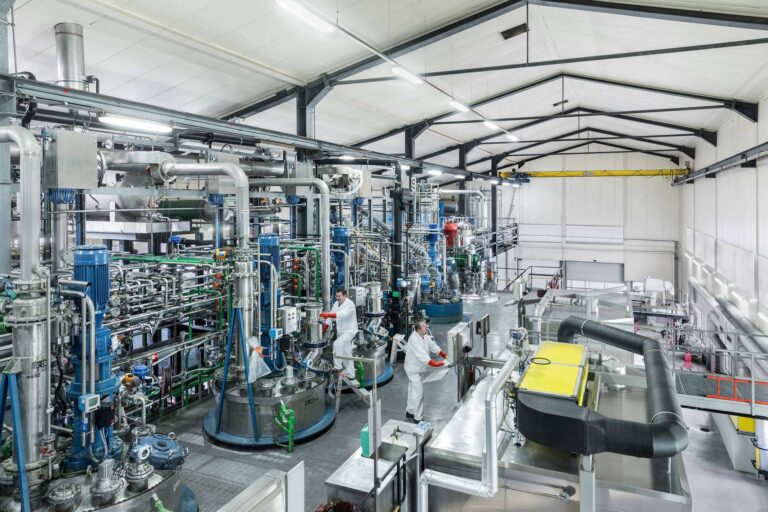
the history of valsynthèse is closely linked to that of nitroglycerine. initially used to dynamite the simplon tunnel, this substance has found a second life in cardiovascular treatments. this transition from explosive to drug illustrates the company’s ability to adapt its know-how to the demands of fine chemistry. today, valsynthèse produces around 1,000 tonnes of chemical substances a year, thanks to its 27 reactors, for some fifty customers around the world.
30.01.2026
A new national research programme recognizes EPFL’s expertise
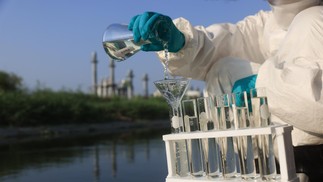
Separation technologies are the workhorses of modern society. Essential for isolating specific components from gas, liquid, or solid mixtures, they provide the purified water, food, and pharmaceuticals we consume, and the materials that go into our homes, cars, and electronic devices. Improving the performance of separation technologies is essential for addressing many global challenges, such as capturing CO₂ directly from the air, making ammonia production more energy-efficient, and recovering critical metals from waste streams.
29.01.2026
In Two Weeks, Digital Life Sciences Students Prototype an AI Application
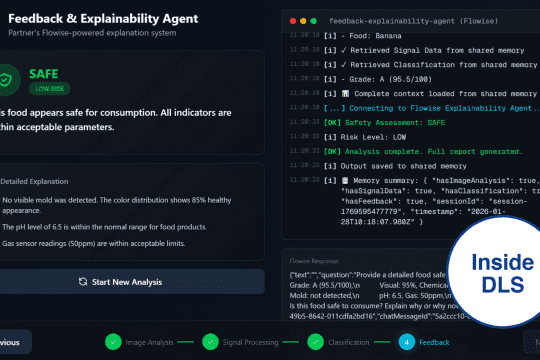
As part of the Starting with AI course in the Digital Life Sciences (DLS) major at the School of Engineering, Bachelor’s students in Life Sciences Engineering took on an ambitious challenge: designing a functional artificial intelligence application in just two weeks to address a real-world problem in the life sciences.
20.01.2026
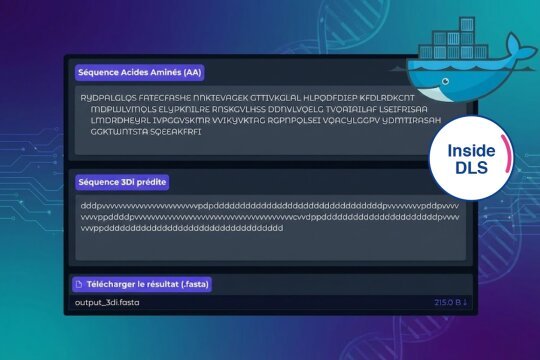
DevOps Meets Life Sciences: Making AI Reproducible and Deployable
Within the Digital Life Sciences major of the Life Sciences Engineering bachelor, students do more than explore state-of-the-art artificial intelligence models—they learn how to make them robust, reproducible, and deployable. A recent project combining DevOps, AI, and protein science perfectly illustrates this approach.
03.12.2025
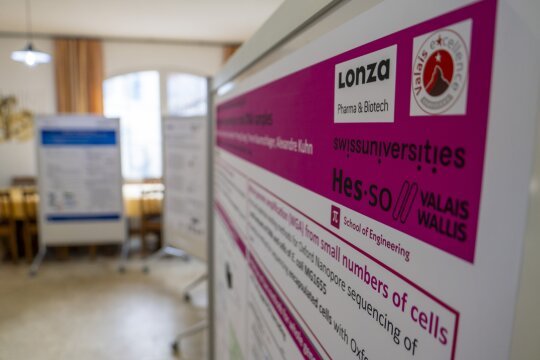
Lonza and HES-SO Valais-Wallis strengthen collaboration through the Advanced Biomanufacturing Lab.
The Advanced Biomanufacturing Lab (ABL), a joint research platform between Lonza AG and HES-SO Valais-Wallis, has been operating for several years as a key driver of innovation in industrial biotechnology. Established to address the challenges of Industry 4.0, the ABL focuses on developing industrial expertise in digitization, automation, and control of biotechnological processes.
28.10.2025
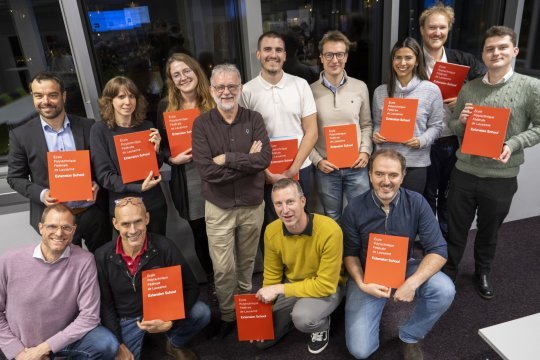
First graduates in industrial decarbonisation and a new cohort for energy transition: a day dedicated to a sustainable future in Sion
On October 27, the School of Engineering of the HES-SO Valais-Wallis and the École Polytechnique Fédérale de Lausanne (EPFL) celebrated an important milestone in their ongoing collaboration on energy transition. Two major events took place back-to-back at the Energypolis Campus in Sion: the official launch of the second edition of the continuing education programme in Sustainable Energy Systems Engineering, and the graduation ceremony of the first cohort of the programme focused on industrial decarbonisation.