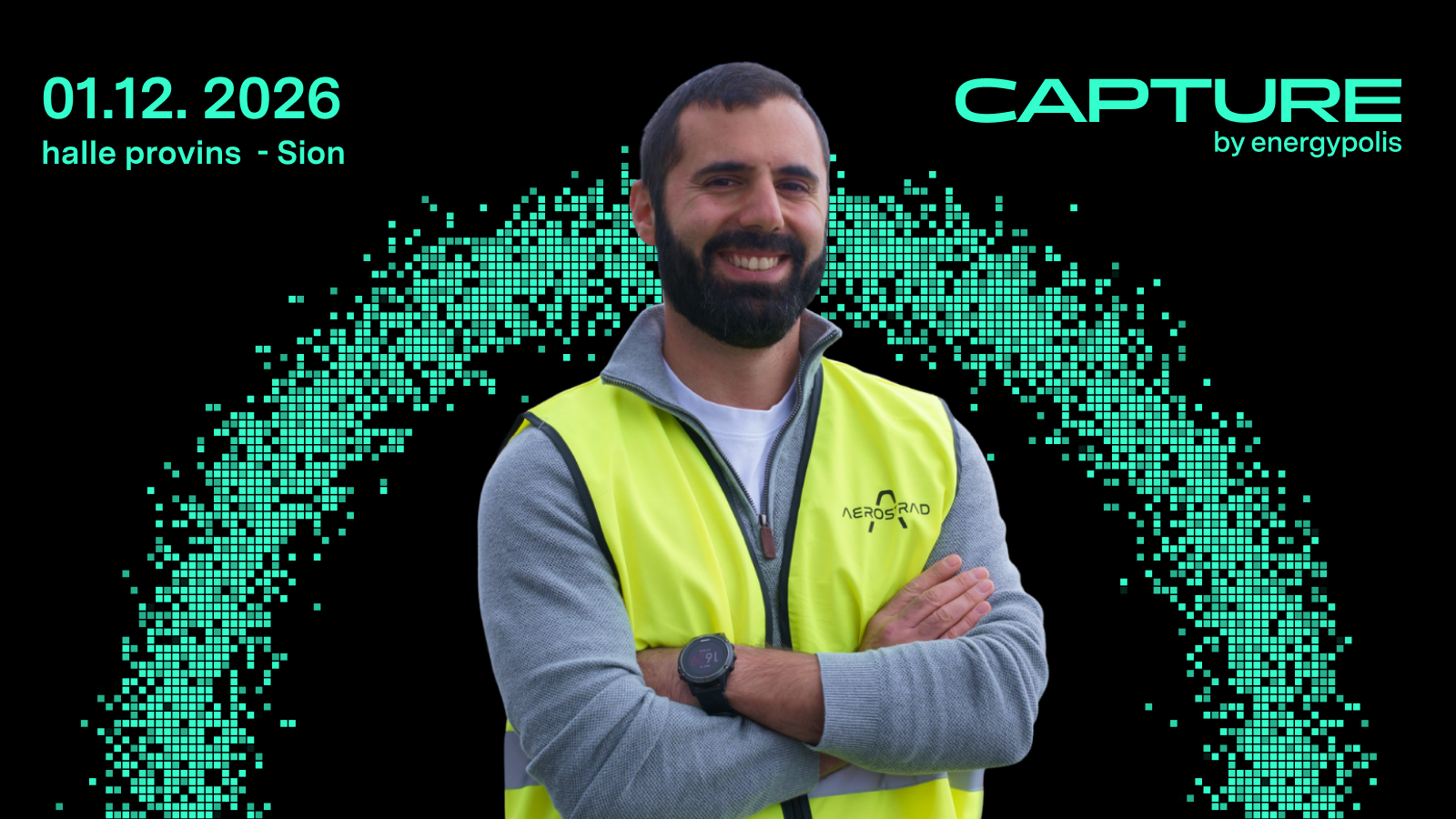
“Connecting a parked aircraft to clean power just one minute faster at every turnaround in Zurich, Geneva and Basel would save around 860 tonnes of CO₂ a year, as much as driving a car around the Earth more than 100 times,” says Elie Maalouli.
On the Energypolis campus in Sion, his startup Aerostrad is building robotics and automation that bring clean power to the aircraft, so it no longer has to burn kerosene on the ground. On 1 December, Aerostrad is part of the startup exhibition at CAPTURE.
Every flight starts and ends on the ground
When we talk about clean aviation, we always look up at the sky, yet every flight starts and ends on the ground. Before take-off and after landing, an aircraft still needs electricity for lights, cabin air and flight preparation. Most of the time, it makes that electricity itself, with an onboard engine burning about 1.7 kg of kerosene every minute.
This happens at every turnaround, and connecting to external power often takes several minutes too long. On average, connection is delayed by 10 minutes per flight: 17 kg of kerosene, 32 kg of CO₂ and CHF 55 per flight. Zurich, Geneva and Basel together handle about 270,000 turnarounds a year, roughly 740 a day.
An extra hand on the apron
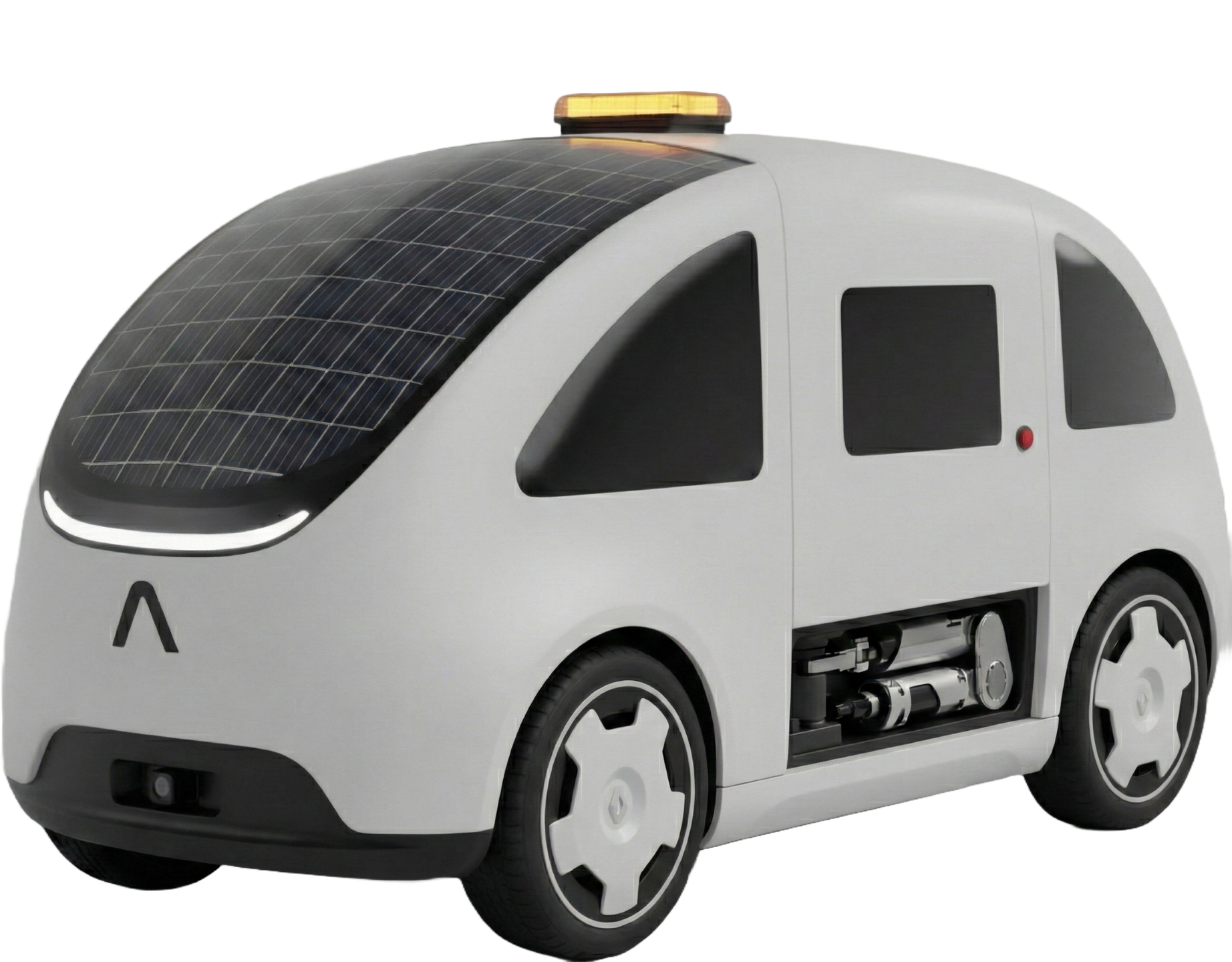
Aerostrad automates the delivery of clean power to parked aircraft, in two ways. Its software reads flight schedules and live apron data to predict which aircraft will need power, and when, then sends a charged unit to the right stand at the right time. Its robotics kit upgrades the units airports and ground handlers already own: guided by cameras, a robotic arm finds the socket on the aircraft, then plugs in and out automatically.
« Aerostrad gives ground teams an extra hand, a robotic one, that connects parked aircraft to external power faster, so aircraft switch off their onboard engines sooner and the apron becomes quieter and cleaner. Ground handlers no longer move generators or handle cables and connectors weighing over 10 kg, » says Elie Maalouli, founder of Aerostrad.
The need is growing. Air travel is set to more than double by 2050, and 37% of ground handling professionals already expect staff shortages. Airports are moving towards automated ground operations: Zurich is trialling autonomous shuttles, Turkey is investing in autonomous tractors, and Schiphol is testing robotic connection.
Power wherever the aircraft parks
A mobile unit goes wherever the aircraft parks, exactly when it is needed. That makes the biggest difference at remote stands, away from the terminal, where ground teams have to travel to each plane and every minute of delay costs airlines in fuel and airports in emissions and noise.
« Installing fixed power at remote stands costs hundreds of thousands to millions of euros and takes one to two years of works. With our mobile units, the airport needs no construction and no upfront investment. »
From Sion to Zurich, Geneva and Basel
Sion Airport is supporting the development of Aerostrad’s prototype, and the two are finalising their agreement. The first step is to measure the impact of clean external power on noise and pollution at the stand. Sion will then become the testing ground for robotic connection, where the team trains and proves that the system can plug into an aircraft safely and reliably.
From there, the goal is to expand to Switzerland’s international airports, and then abroad, starting with Norway and France. Aerostrad is a finalist of the Prix Créateurs BCVS 2026, the Swiss Innovation Challenge 2026 and the Solar Impulse Foundation’s call for solutions in clean aviation.
Built for today, ready for electric aircraft
Aerostrad was founded to support electric aviation by charging electric aircraft. « It is interesting, but today it is not a priority.” That is what airports told us when we started, » says Elie Maalouli. « Our interviews showed that airports were not ready for that yet, but they shared one urgent need: an extra hand on the apron. So we listened and refocused on what they need today. Our mobile units and robotic connection are built for exactly that, and the same platform will be ready to charge electric aircraft when they arrive. »
What you’ll see at their stand
Visitors will see a video of the system in action and a 3D model showing how it works, from predicting where power is needed to connecting the aircraft. The team is happy to walk anyone through it, whether they work in aviation or are simply curious about automation.
The question they would love to hear: « How can I invest in Aerostrad? » And for those more curious about the story behind the company: « What prepared you to build your own business? »
Who Elie wants to meet in Sion
After building its market and customer base, Aerostrad is now focusing on developing the product. Elie Maalouli would love to meet:
- Professors in robotics, artificial intelligence and energy on the Energypolis campus, to explore research partnerships
- Investors who want to back deep tech and clean aviation, to fund the next stage of the prototype
- Engineering and computer science students looking for a master’s project, an internship or a first job, who want to help build something real on an airport apron
Want to meet the Aerostrad team? Come and see them at the startup exhibition of CAPTURE by Energypolis, on 1 December 2026 at the Halle Industrielle Provins in Sion, use FLIGHT40, for 40% discount at checkout.